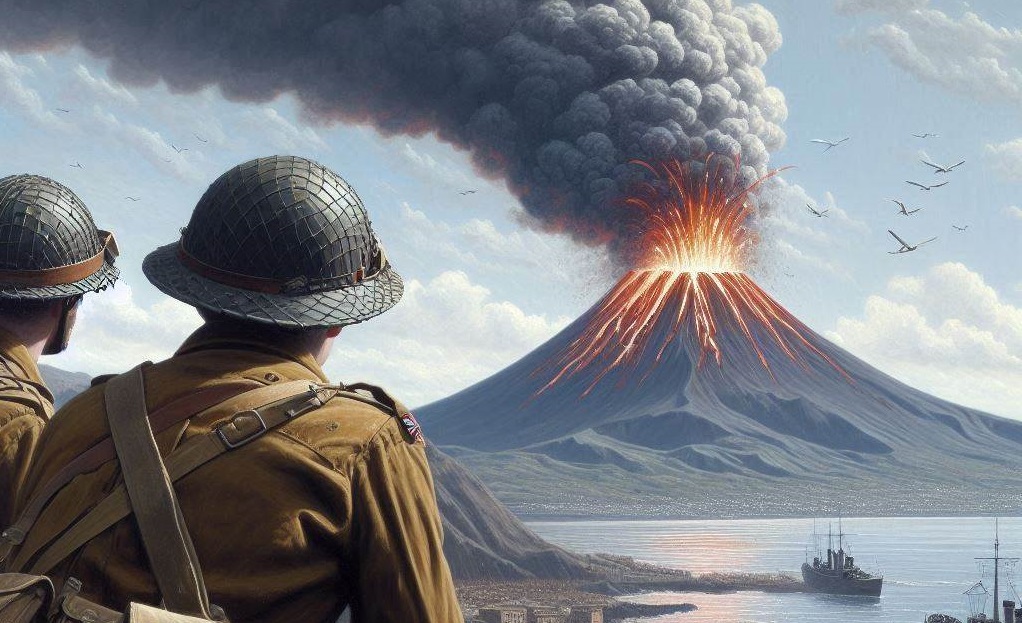
Earlier this year, I released my debut novel Prayer in Time of War. It tells the story of elderly veteran Ernie as he returns to an Italy transformed from his experiences during the Second World War, in search of the girl he left behind in the back streets of Naples half a century before. The 1944 eruption of Vesuvius is a key moment in the novel. Continuing my series of blogs marking six months since publication, I wanted to highlight ten key aspects of this extraordinary moment in Italian history.
Mount Vesuvius, the infamous volcano that buried Pompeii in AD 79, erupted again in 1944. While this eruption didn’t have the same catastrophic impact, it was still a significant event with many intriguing aspects. Here are ten little-known facts about the 1944 eruption.
The Last Eruption to Date
The 1944 eruption of Mount Vesuvius is the most recent significant eruption of this notorious volcano. Since then, Vesuvius has remained dormant, but it is still considered one of the most dangerous volcanoes in the world due to its potential for future eruptions.
World War II Context
The eruption occurred during World War II, adding to the chaos of the time. Allied forces were stationed in the area, and the eruption disrupted military operations. The soldiers witnessed the eruption firsthand, making it a unique historical intersection of natural disaster and wartime activity.
Destruction of Villages
Several villages on the slopes of Vesuvius were destroyed by the lava flows. The villages of San Sebastiano al Vesuvio, Massa di Somma, and part of San Giorgio a Cremano were particularly affected. The lava flows engulfed homes and farmland, displacing many residents. Anyone who has read Prayer in Time of War already, will know that San Sebastiano features heavily in the action.
Effusive-Explosive Nature
The 1944 eruption was both effusive and explosive. This means it involved both the flow of lava and violent explosions of ash and rock. This combination made the eruption particularly dramatic and destructive.
Impact on Aviation
The ash cloud from the eruption reached high altitudes, affecting aviation in the region. Allied aircraft had to navigate around the ash plume, which posed a significant hazard to engines and visibility.
Scientific Observations
The eruption provided valuable data for volcanologists. Scientists were able to study the eruption in real-time, gaining insights into the behaviour of Vesuvius and improving their understanding of volcanic activity.
Cultural Impact
The eruption inspired various cultural works, including films and literature, of which Prayer in Time of War is the most recent. It captured the imagination of people worldwide, much like the ancient eruption that buried Pompeii. The dramatic visuals and the wartime context made it a compelling story.
Evacuation Efforts
Despite the ongoing war, there were organised evacuation efforts to move residents away from the danger zone. These efforts were crucial in preventing a higher death toll, showcasing the resilience and cooperation of the affected communities.
Economic Consequences
The eruption had significant economic impacts on the region. Agriculture was heavily affected, with lava flows destroying vineyards and orchards. The local economy, already strained by the war, faced additional challenges due to the volcanic activity.
Legacy and Preparedness
The 1944 eruption served as a reminder of the ever-present threat posed by Vesuvius. It led to improved monitoring and preparedness measures in the region. Today, Vesuvius is closely watched by scientists, and emergency plans are in place to protect the millions of people living in its shadow.
Mount Vesuvius remains a symbol of nature’s power and unpredictability. The 1944 eruption, though less famous than the ancient one, is a fascinating chapter in the volcano’s history, blending natural wonder with the human stories of those who lived through it.
Prayer in Time of War is out now. Read more about the novel here. Read more about life in wartime Naples here. Or order your copy today.

 davidclensy.com
Leave a comment