The Women’s Royal Naval Service (WRNS), affectionately known as the Wrens, holds a distinguished place in British military history. As the women’s branch of the Royal Navy, the WRNS played a vital role in both World Wars and continued to serve with distinction until its integration into the Royal Navy in 1993. As I discovered during the research for my forthcoming novel, For Those In Peril, the story of the Wrens is one of resilience, adaptability, and a gradual but determined march towards equality in the armed forces.
The WRNS was established in 1917 during the First World War, at a time when the Royal Navy faced a critical shortage of manpower. The First Lord of the Admiralty invited Dame Katharine Furse, a pioneering figure in women’s military service, to form a naval organisation for women. Officially approved by King George V on 29 November 1917, the WRNS was created to free men for sea service by assigning women to shore-based roles.
Initially, the duties of the Wrens were limited to clerical and domestic tasks, such as cooks, stewards, and telephonists. However, their responsibilities quickly expanded to include roles such as wireless telegraphists, mechanics, and drivers. By the end of the war, the WRNS had grown to 5,500 members, including 500 officers. The first Wren to die on active service was Josephine Carr, who perished when the RMS Leinster was torpedoed in October 1918.
Despite their contributions, the WRNS was disbanded in 1919 following the end of the war, reflecting the broader societal expectation that women would return to civilian life.
Revival and Expansion in the Second World War
With the outbreak of the Second World War in 1939, the WRNS was revived under the leadership of Vera Laughton Mathews, with Ethel “Angela” Goodenough as her deputy. This time, the scope of women’s involvement was significantly broader. The WRNS expanded to include roles such as radar plotters, weapons analysts, electricians, and even aircraft mechanics. Women were also involved in operating the Colossus computers at Bletchley Park, playing a crucial role in code-breaking efforts against the Axis powers.
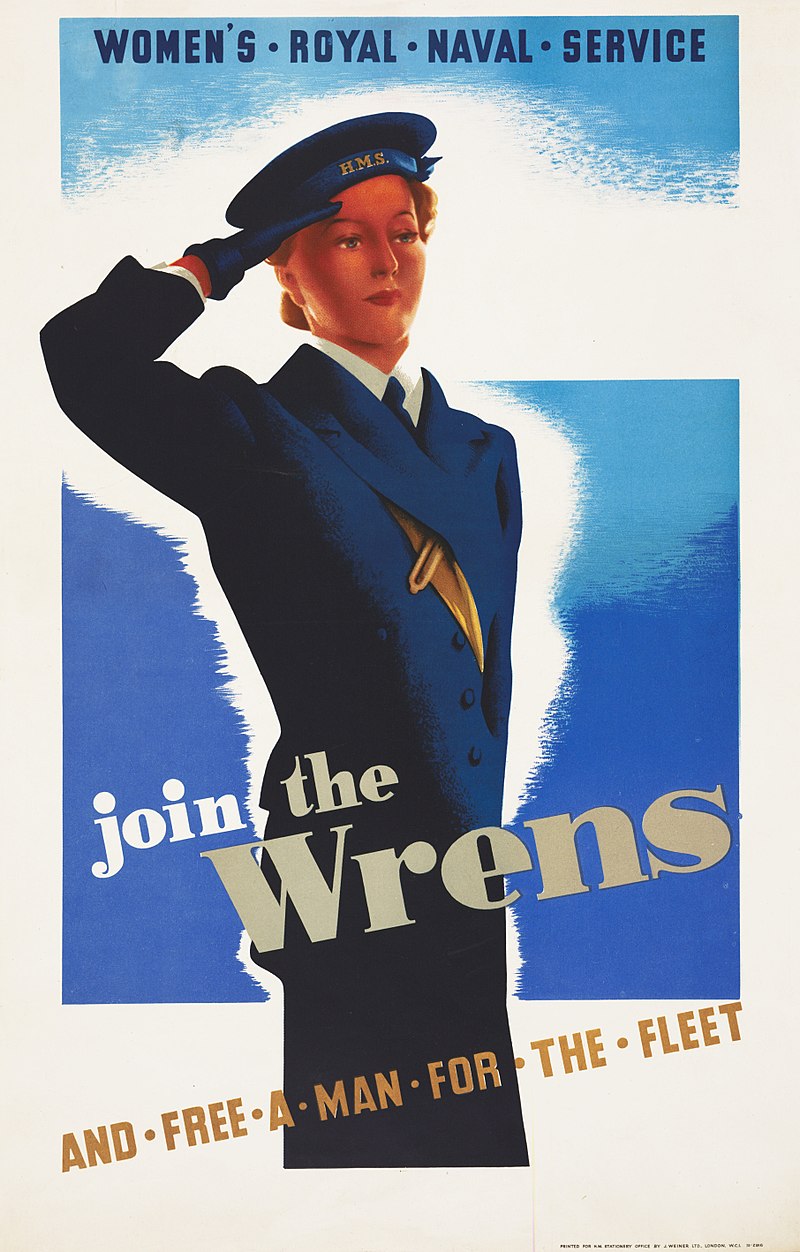
The slogan “Join the Wrens and free a man for the Fleet” captured the spirit of the time, as women stepped into roles traditionally held by men. By 1944, the WRNS had reached a peak strength of 75,000 personnel. The National Service Act of 1941 introduced conscription for women, and many chose to join the WRNS over other branches of the armed forces.
The Wrens also played a key role in the Western Approaches Tactical Unit (WATU), where they helped develop naval strategies to counter German U-boat threats. Using wargaming techniques, they trained naval officers in anti-submarine tactics, contributing significantly to the Battle of the Atlantic.
Despite their non-combatant status, 102 WRNS members were killed and 22 wounded during the war. Their service was marked by professionalism, courage, and a quiet determination to prove their worth.
One of the most significant developments during the Second World War, was the inclusion of women in technical trades. Wrens were trained as everything from electricians to ordnance workers.
In Liverpool, for example, Ordnance Wrens were tasked with assembling and maintaining anti-aircraft guns such as the “pom-pom” – a rapid-firing naval weapon. These roles required a high degree of technical skill and were critical to the maintenance and readiness of naval equipment.
Communications and Intelligence
Perhaps the most iconic contribution of the WRNS during the war was in the field of signals intelligence. Hundreds of Wrens were stationed at Bletchley Park, where they operated the Colossus computers and Bombe machines used to decipher German Enigma and Lorenz codes. These women worked in shifts around the clock, often in secrecy, and played a direct role in shortening the war by providing vital intelligence to Allied commanders.
Wrens also served as telegraphists and coders aboard shore stations and in mobile units, relaying encrypted messages between naval commands. Their work was essential to the coordination of naval operations, including the D-Day landings.
Transport and Logistics
The WRNS also played a key role in logistics and transport. Women served as: motor transport drivers, motorcycle dispatch riders and storekeepers and supply clerks.
They ensured the smooth movement of personnel, equipment, and supplies across naval bases and between operational theatres. Some Wrens even flew aircraft in non-combat roles, ferrying planes between factories and airfields, although this was more common in the Air Transport Auxiliary.
Medical support
While not combatants, many Wrens served in medical support roles, including as nurses, medical clerks, and welfare officers. They provided care for injured sailors and supported the physical and mental well-being of naval personnel.
Though most WRNS personnel were based in the UK, many were deployed overseas to support naval operations in the Mediterranean, the Far East, and the Atlantic. They served in Gibraltar, Ceylon (now Sri Lanka), and even in Washington D.C., where they worked in liaison roles with the United States Navy.
Despite their non-combatant status, WRNS members were not immune to the dangers of war. A total of 102 Wrens were killed and 22 wounded during the conflict. Some died in air raids on naval bases, while others perished at sea while travelling between postings.
Post-War Service
Unlike after the First World War, the WRNS was not disbanded following the end of the Second World War. Instead, it became a permanent part of the Royal Navy’s structure. The post-war years saw the Wrens continue to serve in a wide range of roles, though they remained a separate entity from their male counterparts.
The 1970s marked a turning point in the history of the WRNS. The growing movement for gender equality, combined with legal reforms such as the Equal Pay Act 1970 and the Sex Discrimination Act 1975, placed pressure on the armed forces to modernise. In 1976, Vonla McBride became Director of the WRNS and oversaw significant reforms, including the application of the Naval Discipline Act to WRNS personnel, placing them under the same legal framework as male sailors.
In 1990, a major milestone was reached when HMS Brilliant became the first operational Royal Navy warship to carry women as part of its crew. That same year, Chief Officer Pippa Duncan became the first WRNS officer to command a Royal Navy shore establishment.
The final chapter of the WRNS came in 1993, when it was fully integrated into the Royal Navy. Women were now allowed to serve on board ships and submarines as full members of the crew, with equal rights, responsibilities, and opportunities. The integration marked the end of the WRNS as a separate entity, but its legacy lives on in the thousands of women who continue to serve in the Royal Navy today.
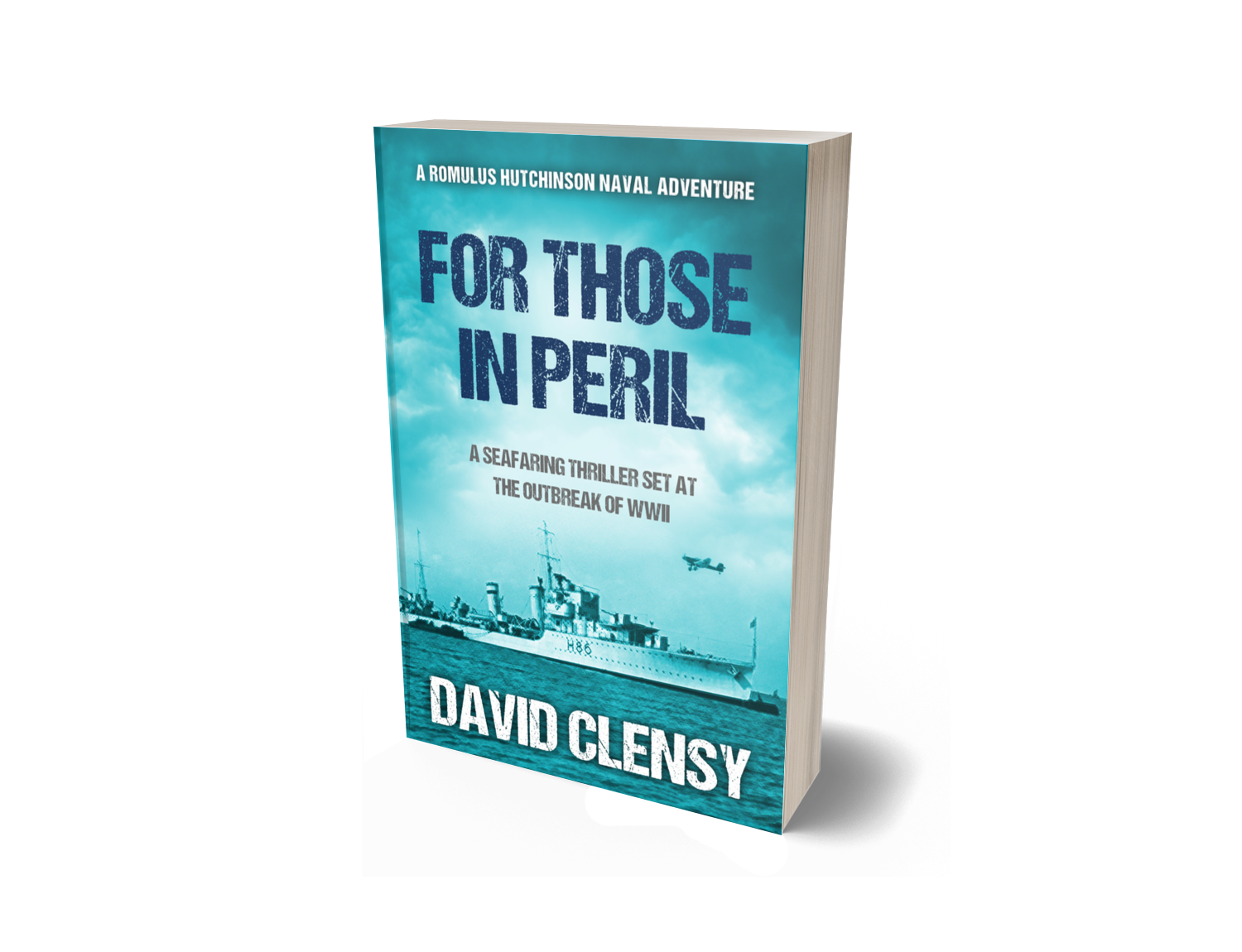
My naval adventure novel For Those In Peril – the opening of a five-book series – is out on August 1st in both paperback and Kindle formats. It tells the story of Romulus Hutchinson (Rom), a young RNVR officer, as he makes his way in the service, and his twin brother Remus Hutchinson (Remmie) who has joined the Merchant Navy. We also get to know Charlotte, the love of Rom’s life, as she joins the WRNS and makes her way at Western Approaches HQ. Read more about how the new novel came about.
FOR THOSE IN PERIL is the first book in the Romulus Hutchinson Naval Adventure series: action-packed, authentic historical adventures following twin brothers serving with the Royal Navy and the Merchant Navy during the Second World War.
 davidclensy.com
Leave a comment