The Battle of the Atlantic was the longest continuous campaign of the Second World War, lasting from 1939 to 1945. While most people know it involved German U-boats and Allied convoys, there are some fascinating details that rarely make it into the history books.
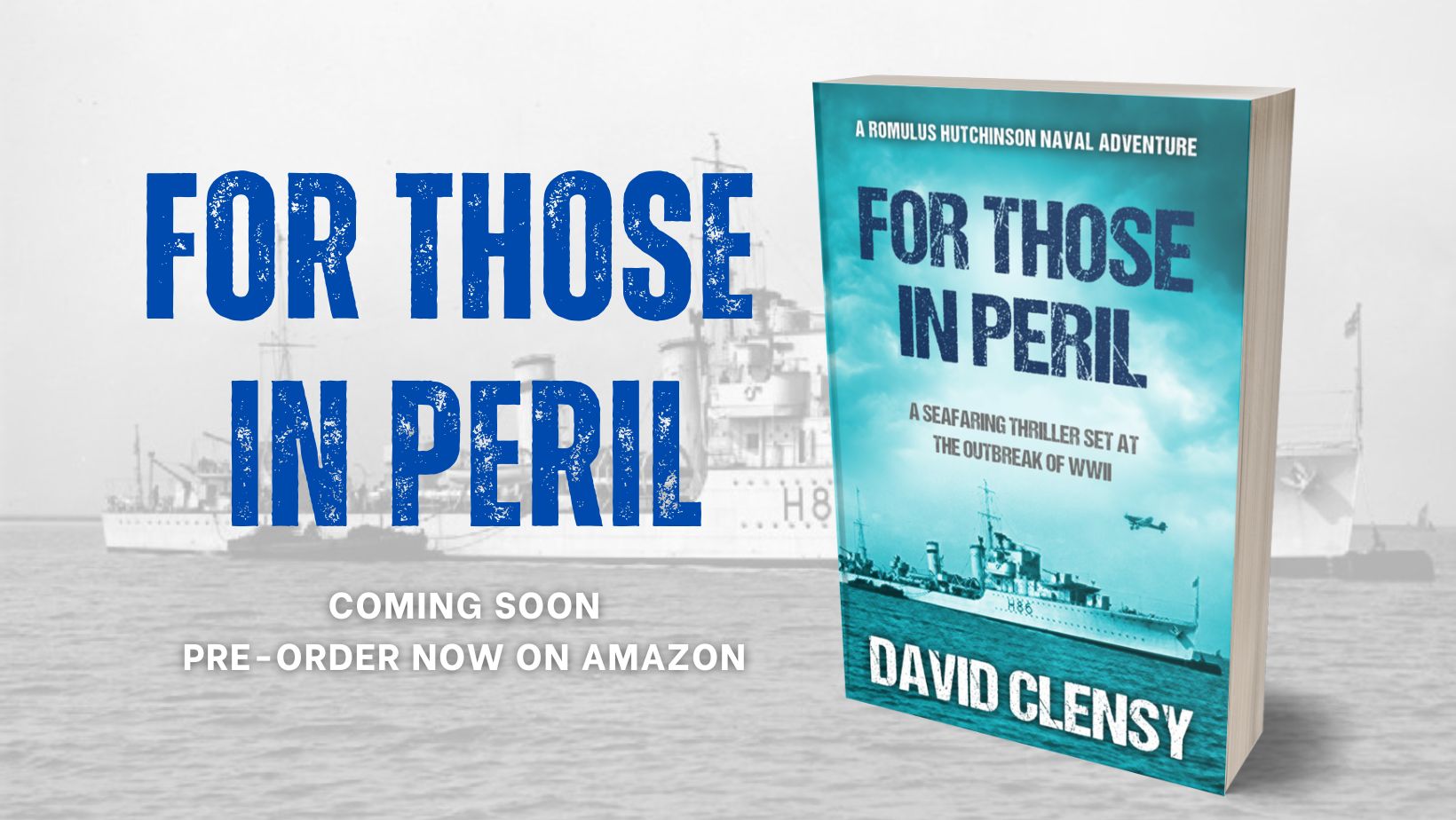
In 2024, I signed a five-book deal with historical fiction specialist Sapere Books to deliver a series of World War II naval thrillers. The first of the series will be published in August 2025 (you can order For Those In Peril for Kindle or paperback here). In the course of researching the novel, I stumbled across some extraordinary facts about the Battle of the Atlantic, which I thought might be of interest:
A pigeon helped save a bomber crew
A carrier pigeon named Winkie flew more than 120 miles across the North Sea to alert rescuers after an RAF bomber ditched into the water. The RAF used her arrival time and wind conditions to locate and save the crew. Winkie was awarded the Dickin Medal in 1943.
A U-boat was sunk by its own toilet
In 1945, German submarine U-1206 was forced to surface after a malfunction in its high-pressure toilet system caused seawater to flood the vessel. It was then attacked and scuttled by its crew.
Canada ended the war with the world’s third-largest Navy
Despite starting the war with just 13 ships and 3,500 personnel, Canada expanded its navy to over 900 ships and became the third-largest naval power by 1945.
The Allies and Axis powers fought a secret weather war
Both sides raced to control Arctic weather stations. The Germans even installed an automated station, Weather Station Kurt, in Labrador, Canada, in 1943. It remained undiscovered until 1977. German submarines were tasked with sending weather reports from the Atlantic back to Germany. These transmissions were vital for planning operations.
A ship named after a dog captured an Enigma machine
HMS Bulldog captured the German U-boat U-110 in 1941 and recovered an intact Enigma machine. This helped Bletchley Park break German naval codes and was described by King George VI as “the most important single event in the whole war at sea”.
A plan was developed to make aircraft carriers out of icebergs
Churchill approved a plan to make aircraft carriers from natural icebergs as part of Project Habbakuk. A prototype was built and tested at Lake Patricia in Canada, but the audacious plan never actually reached fruition in the Atlantic. The prototype has long-since melted.
FOR THOSE IN PERIL is the first book in the Romulus Hutchinson Naval Adventure series: action-packed, authentic historical adventures following twin brothers serving with the Royal Navy and the Merchant Navy during the Second World War. https://getbook.at/ForThoseInPeril
 davidclensy.com
Leave a comment