In the vast and perilous theatres of the Second World War, the Royal Navy’s destroyers stood as vigilant sentinels of the sea. Agile, heavily armed, and endlessly versatile, these ships were the backbone of Britain’s naval defence – protecting convoys, hunting submarines, and engaging enemy forces from the Arctic Circle to the Mediterranean.
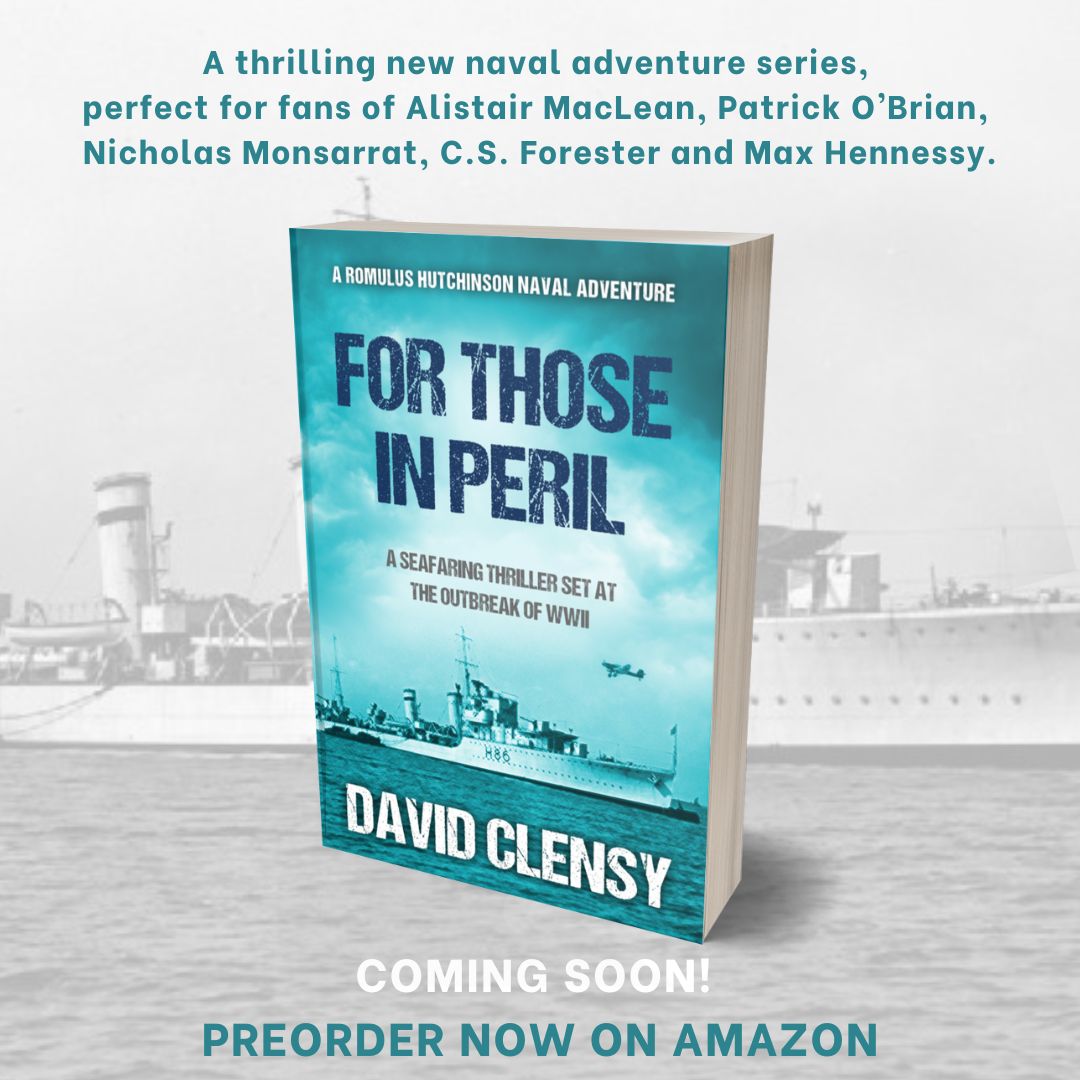
In my forthcoming book – For Those In Peril (released August 1st 2025, preorder for Kindle now) – the hero of our story, Romulus Hutchinson gets a baptism of fire as a young sub-lieutenant on the HMS Grenade, the first in a series of illustrious destroyers on which he carves out his wartime service. In this blog I thought it would be useful to provide a sort of “beginner’s guide” to Royal Navy destroyers in the period.
In fact, the destroyer’s lineage dates back to the late 19th century, when navies sought a counter to the emerging threat of torpedo boats. The Royal Navy’s early “torpedo boat destroyers” evolved rapidly, becoming faster, more seaworthy, and increasingly capable of independent operations. By the outbreak of the Second World War in 1939, destroyers had become indispensable fleet units, designed to operate alongside capital ships or independently in escort roles.
Britain entered the war with a mix of pre-war designs and newer vessels, but the demands of global conflict soon led to the rapid expansion and diversification of destroyer classes. From the powerful Tribal-class to the compact Hunt-class escorts, each design reflected the shifting priorities of naval warfare.
Roles and Responsibilities
Destroyers were the Swiss Army knives of the Royal Navy. Their duties were as varied as they were vital:
Convoy Escort: Perhaps their most critical role, destroyers shepherded merchant convoys across the Atlantic, Arctic, and Indian Oceans. They used ASDIC (early sonar) to detect German U-boats and deployed depth charges to destroy them.
Fleet Screening: In fleet actions, destroyers formed protective screens around battleships and aircraft carriers, guarding against submarines, torpedo bombers, and surface raiders.
Torpedo Attacks: Equipped with powerful torpedoes, destroyers could strike at larger enemy vessels, often under cover of darkness or poor weather.
Shore Bombardment: During amphibious operations, destroyers provided naval gunfire support, softening enemy defences ahead of landings.
Rescue and Recovery: They frequently rescued survivors from torpedoed ships or downed aircraft, often under fire or in treacherous seas.
Design and Layout
Royal Navy destroyers were compact but densely packed with technology and weaponry. A typical wartime destroyer displaced between 1,300 and 2,500 tons and measured around 100–120 metres in length. Their layout was a careful balance of firepower, speed, and endurance.
Key Features Included:
Main Armament: Usually 4.7-inch or 4-inch guns in single or twin mounts, positioned fore and aft.
Torpedo Tubes: Typically two quadruple mounts amidships, capable of launching 21-inch torpedoes.
Anti-Aircraft Guns: Oerlikon 20mm and later Bofors 40mm guns were added as air threats increased.
Depth Charges: Carried on racks and throwers at the stern, with later ships also fitted with Hedgehog anti-submarine mortars.
Radar and ASDIC: Radar became increasingly common as the war progressed, allowing for surface and air detection. ASDIC was crucial for submarine hunting.
The Bridge and Pilothouse
One of the most distinctive features of early-war British destroyers was the open bridge. Exposed to the elements, the bridge was where the captain and officers commanded the ship. It offered excellent visibility but little protection from wind, rain, or enemy fire. Crews often endured freezing spray in the North Atlantic or blistering heat in the Mediterranean.
Beneath the open bridge was the pilothouse (or wheelhouse), a partially enclosed space where the helmsman steered the ship and where navigational instruments were housed. The bridge and pilothouse were connected by voice pipes, speaking tubes, and later, sound-powered telephones. Orders were relayed down to the engine room via telegraphs, and to the gun crews and depth charge teams via internal communication systems.
As the war progressed, later destroyers featured enclosed bridges, offering better protection and improved instrumentation, especially as radar and radio became more central to operations.
Life Aboard
Life aboard a destroyer was tough. Crews of 150 to 250 men lived in cramped quarters, often in hammocks slung above mess tables. The ships pitched and rolled violently in heavy seas, and fresh water was rationed. Yet despite the hardships, morale was often high, driven by camaraderie and a shared sense of purpose.
Destroyers were constantly on the move – escorting convoys, patrolling coastlines, or racing to intercept enemy vessels. Maintenance was a constant challenge, especially in wartime conditions, and crews had to be resourceful and resilient.
Notable Classes and Ships
Tribal-class: Larger and more heavily armed, designed for fleet actions. Ships like HMS Cossack became famous for daring operations, such as the Altmark incident in 1940.
J, K, and N-class: Balanced designs used extensively in the Atlantic and Mediterranean.
Hunt-class: Smaller escort destroyers, ideal for convoy protection and coastal duties.
Town-class: Former US Navy destroyers transferred under the Lend-Lease agreement, helping to bolster British numbers in the early years of the war.
Legacy
By 1945, the Royal Navy had commissioned more than 300 destroyers during the war. Many were lost in action, but their contribution was immeasurable. They kept the sea lanes open, protected vital convoys, and stood firm in the face of overwhelming odds.
Today, the legacy of these ships lives on in naval museums, veterans’ stories, historical fiction and the continued evolution of the destroyer as a key component of modern navies. They were, and remain, the guardians of the fleet.
FOR THOSE IN PERIL is the first book in the Romulus Hutchinson Naval Adventure series: action-packed, authentic historical adventures following twin brothers serving with the Royal Navy and the Merchant Navy during the Second World War. It will be available in paperback and Kindle formats from August 1, 2025.
 davidclensy.com
Leave a comment