November 2025 sees the release of In Danger’s Hour (preorder for Kindle now), the second part of the Romulus Hutchinson Naval Adventure Series. Following their earlier adventures in For Those In Peril, in this second instalment, we follow the twins’ service throughout 1941, from the Mediterranean to the coast of west Africa. But as Rom takes to his new role on HMS Walker, he is to find himself coming up against one of the most feared U-boat aces of the Second World War.
Throughout the early years of the Battle of the Atlantic, few names struck fear into Allied convoys like that of Lieutenant Otto Kretschmer. Known as “Silent Otto” for his preference to avoid radio transmissions and his mastery of stealth, Kretschmer became the most successful U-boat commander of the war in terms of tonnage sunk. His exploits aboard U-99 earned him fame back home and notoriety around the world.
Born in 1912 in Heidau, then part of the German Empire, Kretschmer was the son of a schoolmaster and showed early promise in both academic subjects and leadership skills. Before joining the Reichsmarine in 1930, he spent time studying in Britain, which gave him a deep understanding of English culture and language. This experience would later influence his conduct during the war, particularly in his interactions with British captors.
U-boat ace
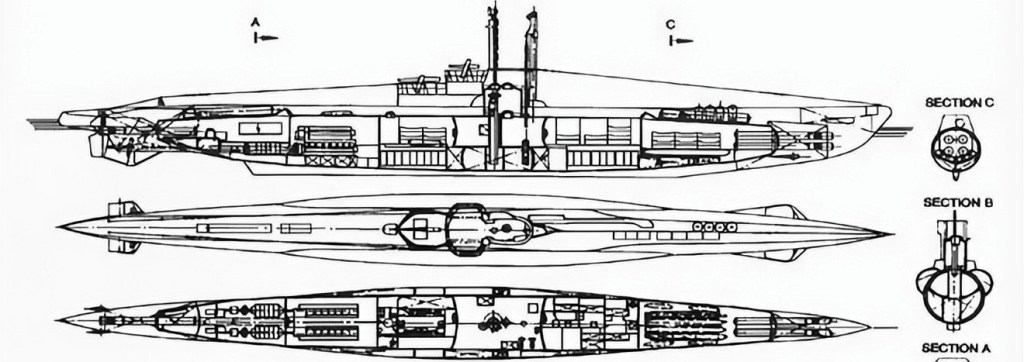
Kretschmer’s wartime career began in earnest with command of U-23, a small Type II submarine. His early patrols in the North Sea and off the Scottish coast were marked by precision and daring. He laid mines in Moray Firth and sank several merchant vessels, including the Danish tanker Danmark and the British destroyer HMS Daring. But it was with U-99, a Type VIIB submarine, that Kretschmer truly made his mark.
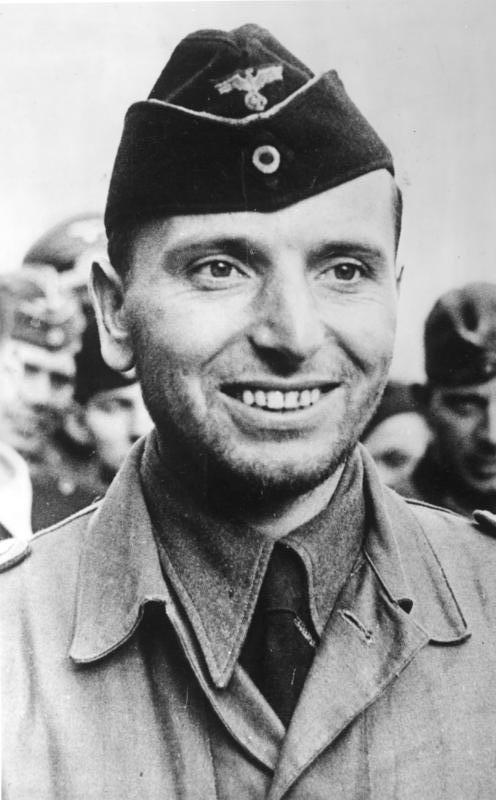
His tactics were revolutionary. Rather than relying on submerged attacks, Kretschmer preferred to strike on the surface under cover of darkness. His motto, “One torpedo, one ship,” reflected his emphasis on accuracy and conservation of resources. This approach proved devastatingly effective. Between April 1940 and March 1941, Kretschmer sank 47 ships, totalling more than 274,000 tons. Among his most notable victims were three British Armed Merchant Cruisers – Laurentic, Patroclus, and Forfar – all sunk in November 1940. These successes earned him the Knight’s Cross of the Iron Cross with Oak Leaves and Swords, one of Nazi Germany’s highest military honours.
A quiet man
Despite his fame, Kretschmer remained a reserved figure. He shunned propaganda and avoided the limelight at home, preferring to focus on his crew and mission. His quiet demeanour and tactical brilliance earned him the respect of both allies and adversaries.
In March 1941, while escorting Convoy HX 112, British destroyers HMS Walker and HMS Vanoc detected U-99 using ASDIC, an early sonar system – which is where Rom and the crew of HMS Walker dramatically come into contact with this towering figure of the Kriegsmarine in my fictionalised account.
If you don’t know what happened next, and want to avoid spoilers before the release of In Danger’s Hour, don’t read any further down this blog.
What happened when HMS Walker met U-99?
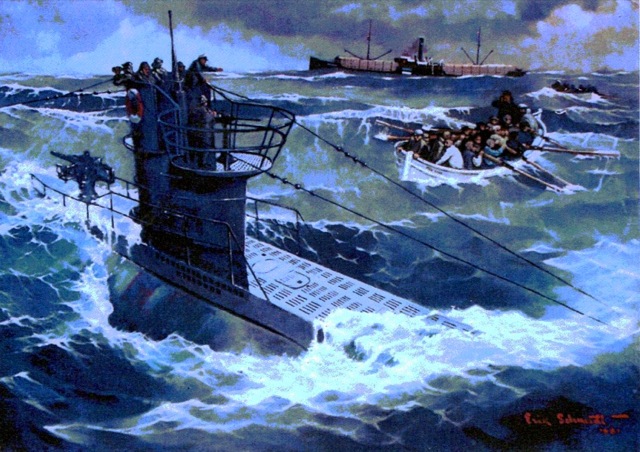
Depth charges forced Kretschmer to dive deep, damaging the submarine severely. With systems failing and the hull compromised, he ordered the ballast tanks blown and surfaced the boat. Under fire from the British ships, Kretschmer made the decision to scuttle U-99 and save his crew. He signalled HMS Walker, requesting rescue for his men and personally helped several towards the nets hanging from the destroyer.
Forty of his crew survived, though three perished. Kretschmer himself was taken aboard HMS Walker and, in a moment of surreal irony, later played bridge with officers from merchant ships he had sunk. His capture marked a turning point in the Battle of the Atlantic. Alongside the loss of fellow U-boat aces Günther Prien and Joachim Schepke – both also brought down by Walker and Vanoc – the event dealt a significant blow to the Kriegsmarine’s morale and operational capability.
Kretschmer spent the remainder of the war as a prisoner, first in Britain and then in Canada. He was held at Bowmanville POW camp, where he remained in contact with German naval command and was even the subject of a failed rescue plot in 1943. After the war, he returned to Germany and joined the Bundesmarine, eventually rising to the rank of Flottillenadmiral and serving as Chief of Staff at NATO’s Baltic Command before retiring in 1970.
I am grateful for the works of countless historians and writers who came before me in informing my fictionalised account, In Danger’s Hour. But I would particularly point the reader to two memoirs. Captain Donald Macintyre wrote about his actual experiences on HMS Walker in his firsthand account U-Boat Killer (1956), while the exploits of Otto Kretschmer were recorded in The Golden Horseshoe (1955), for which Kretschmer worked closely with writer Terence Robertson.
Otto Kretschmer died in 1998 following an accident while on holiday. His legacy remains complex. As a tactician and naval officer, he was unmatched. His wartime record speaks to a cold efficiency and strategic brilliance. Yet he also showed humanity, assisting survivors and refusing to glorify his actions through Nazi propaganda. In the annals of naval warfare, Kretschmer stands as a figure both feared and respected – a silent predator of the deep, brought to heel by the relentless pursuit of HMS Walker.
In Danger’s Hour is released on November 28th, 2025 in paperback and Kindle formats (preorder for Kindle now), the second part of the Romulus Hutchinson Naval Adventure Series – action-packed, authentic historical fiction following twin brothers serving with the Royal Navy and the Merchant Navy during the Second World War.
 davidclensy.com
Leave a comment