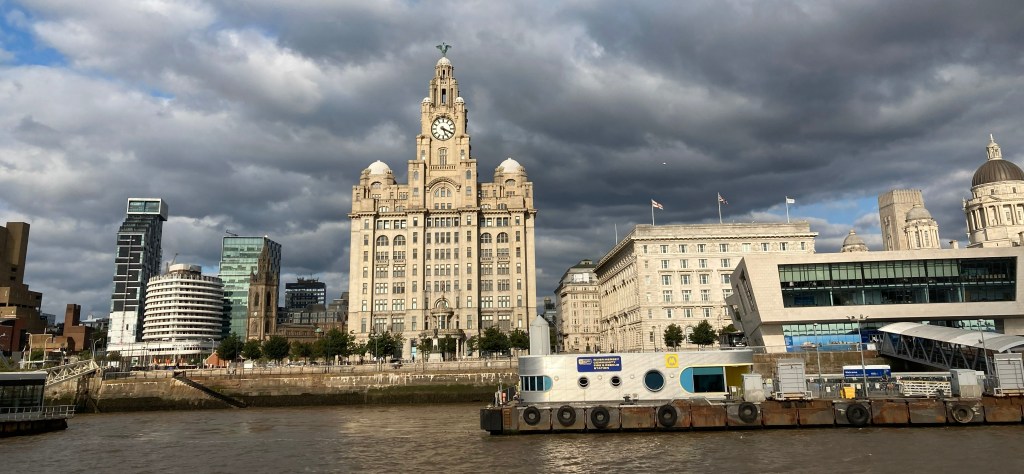
Few landmarks embody the spirit of Liverpool quite like the Royal Liver Building. Indeed, few buildings symbolise their city quite like this waterfront icon with its famous sculptural pinnacles. Standing proudly on the Pier Head since 1911, this architectural masterpiece is more than just a striking silhouette on the waterfront – for Liverpudlians it has come to stand for resilience, ambition, and identity for a city that has weathered extraordinary challenges.
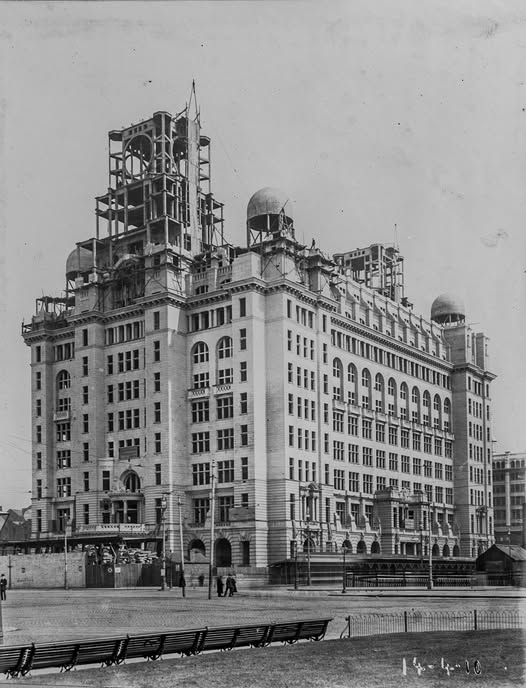
When it opened, the Royal Liver Building was a marvel of engineering. Designed by Walter Aubrey Thomas for the Royal Liver Assurance Company, it was one of the first buildings in the world constructed using reinforced concrete. At 322ft tall, it dominated the skyline, inspired by New York’s skyscrapers, and signalled Liverpool’s status as a global maritime powerhouse. Its twin clock towers, each crowned with a mythical Liver Bird, became an instant emblem of the city.
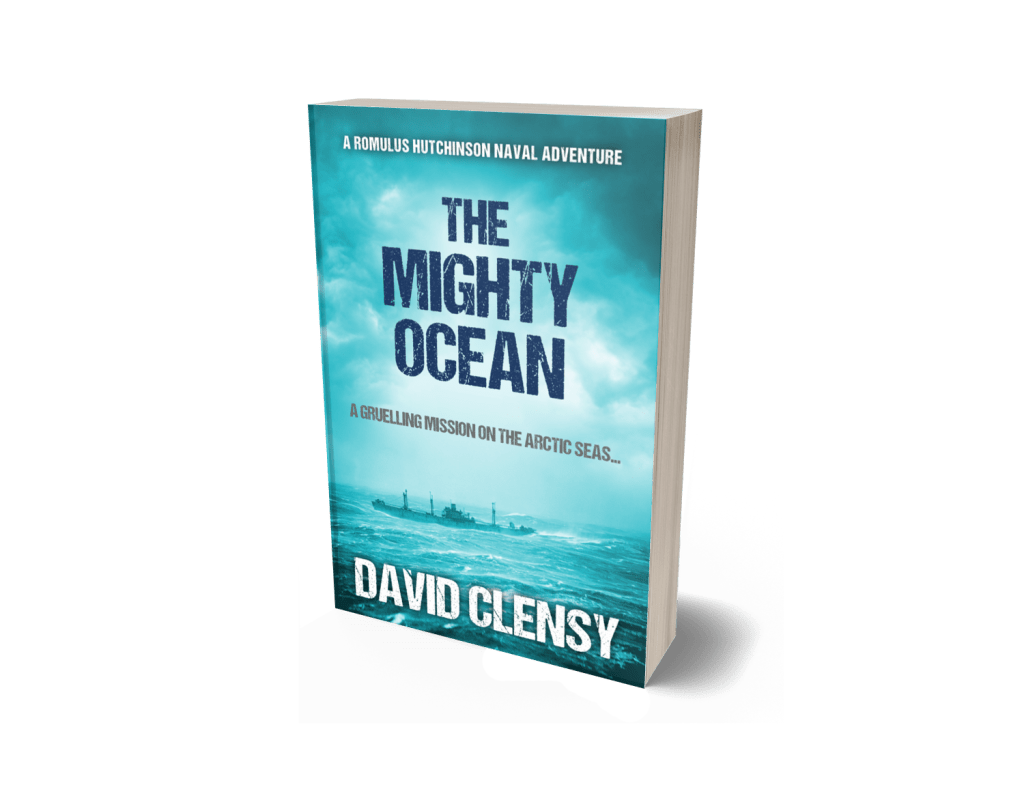
The building takes a central role in the third instalment of the Romulus Hutchinson Naval Adventure series, The Mighty Ocean, which is to be released at the end of February 2026.
The Liver Birds
The Liver Birds themselves are steeped in legend. Having appeared on the city’s crest for centuries, they do of course predate the building itself, but it was their sculptural incarnation that made them recognisable world-wide.
The earliest known city seal, dating from the 13th century, featured a bird holding a sprig, though its exact species was unclear. Over time, this evolved into the mythical Liver Bird – often described as a cormorant – clutching a branch of seaweed in its beak. This emblem became official on 22 March 1797, when the College of Arms granted Liverpool its coat of arms. From that moment, the Liver Bird was firmly established as the city’s heraldic symbol, representing its maritime heritage and resilience. Today, the two copper Liver Birds atop the Royal Liver Building are the most famous interpretation of this centuries-old icon.
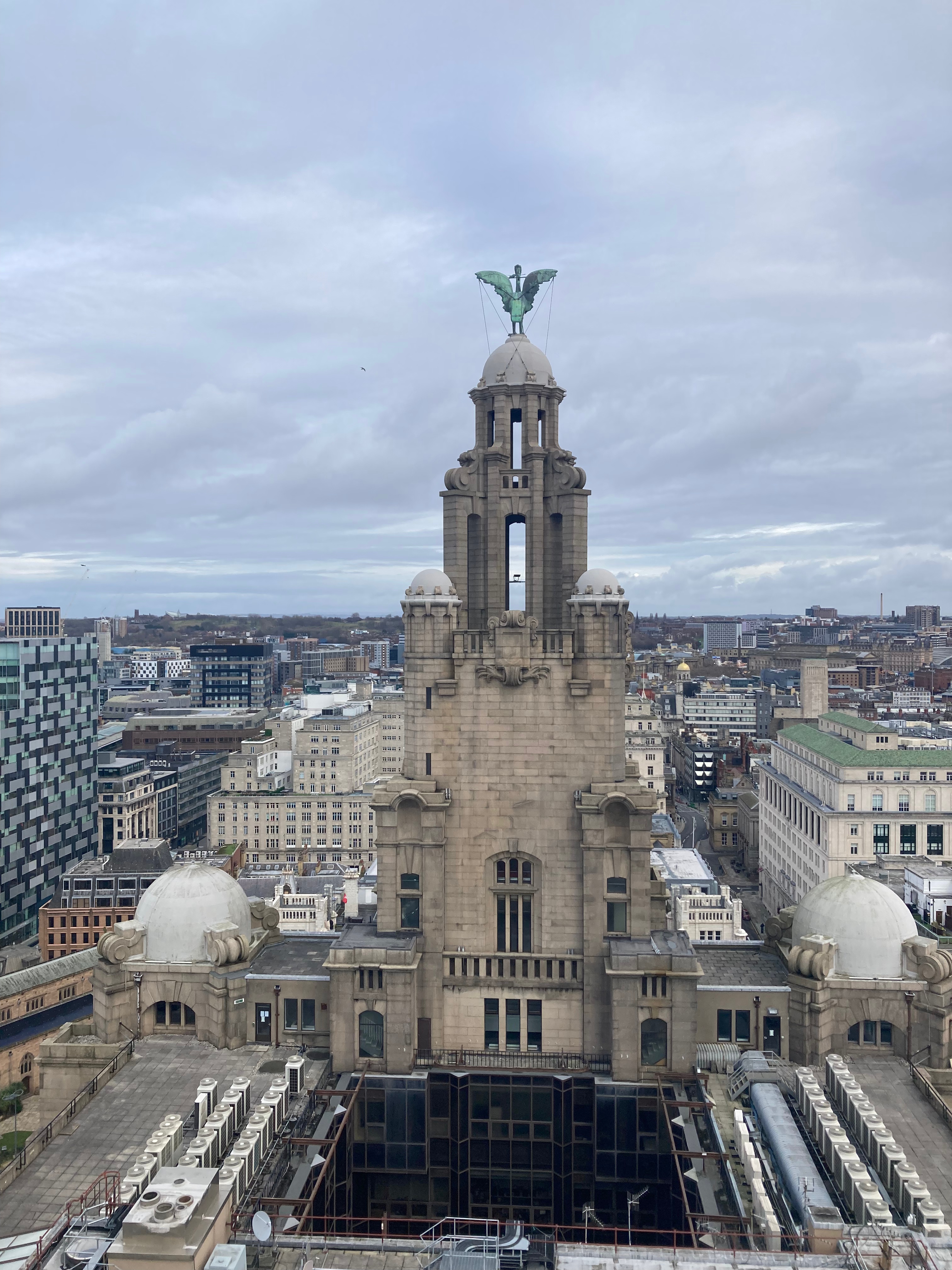
Crafted by German sculptor Carl Bernard Bartels, and cast in the Midlands by the Bromsgrove Guild, each copper bird measures more than 18ft high with a wingspan of 24ft. Local folklore insists that one bird looks out to sea, watching over sailors, while the other faces inland, protecting the city. The myth goes further: if the birds ever fly away, Liverpool will cease to exist.
The debut of the Liver Bird on Liverpool FC’s team shirts came in 1950, as part of a commemorative emblem worn on the white away kit for the FA Cup final against Arsenal. It wasn’t until November 1955 that the bird was formally incorporated into the home red jersey, set within an oval crest bearing the initials L.F.C. The club’s success made the bird a truly global icon.
Wartime resilience
As Londoners looked to St Paul’s Cathedral for reassurance throughout the Blitz, in Liverpool it was the Royal Liver Building that stood firm. During the Second World War, Liverpool was a lifeline for Britain. Its docks were critical for transatlantic convoys bringing food and munitions, making the city a prime target for Luftwaffe bombing raids. Between 1940 and 1942, Liverpool endured the Blitz with devastating losses – thousands killed, tens of thousands of homes destroyed.
Though the surrounding waterfront suffered heavy damage, the iconic building remained largely unscathed, a reassuring presence for a city under siege. Its clock towers continued to mark time through blackouts and air raids, a silent promise that Liverpool would endure. For many, the Liver Birds became symbols of hope – steadfast sentinels watching over a battered but unbroken community.

After the war, the Royal Liver Building retained its status as a beacon of civic pride. It has witnessed Liverpool’s highs and lows – from the decline of the docks to the cultural renaissance of recent decades. Today, it continues to form the waterfront focal point for visitors and locals alike.
The Mighty Ocean is released on February 27, 2026, as our twin Liverpudlian heroes Rom and Remmie Hutchinson continue their seafaring adventures amid the darkest days of the Second World War. To Preorder for Kindle, visit: https://getbook.at/TheMightyOcean
 davidclensy.com
Leave a comment