David Clensy tells of the real life encounters that inspired his short story in A Miracle of Deliverance
This week (Friday, April 17, 2026) will see the publication of A Miracle of Deliverance – bringing together work by seven authors to commemorate the Dunkirk evacuation in a series of linked short stories. I was lucky enough to be asked to write one of the stories, alongside stories from a group of talented fellow Sapere Books authors – Patrick Larsimont, Tony Rea, Suzanne Parsons, Daniel Colter, Tim Chant and D. R. Bailey.
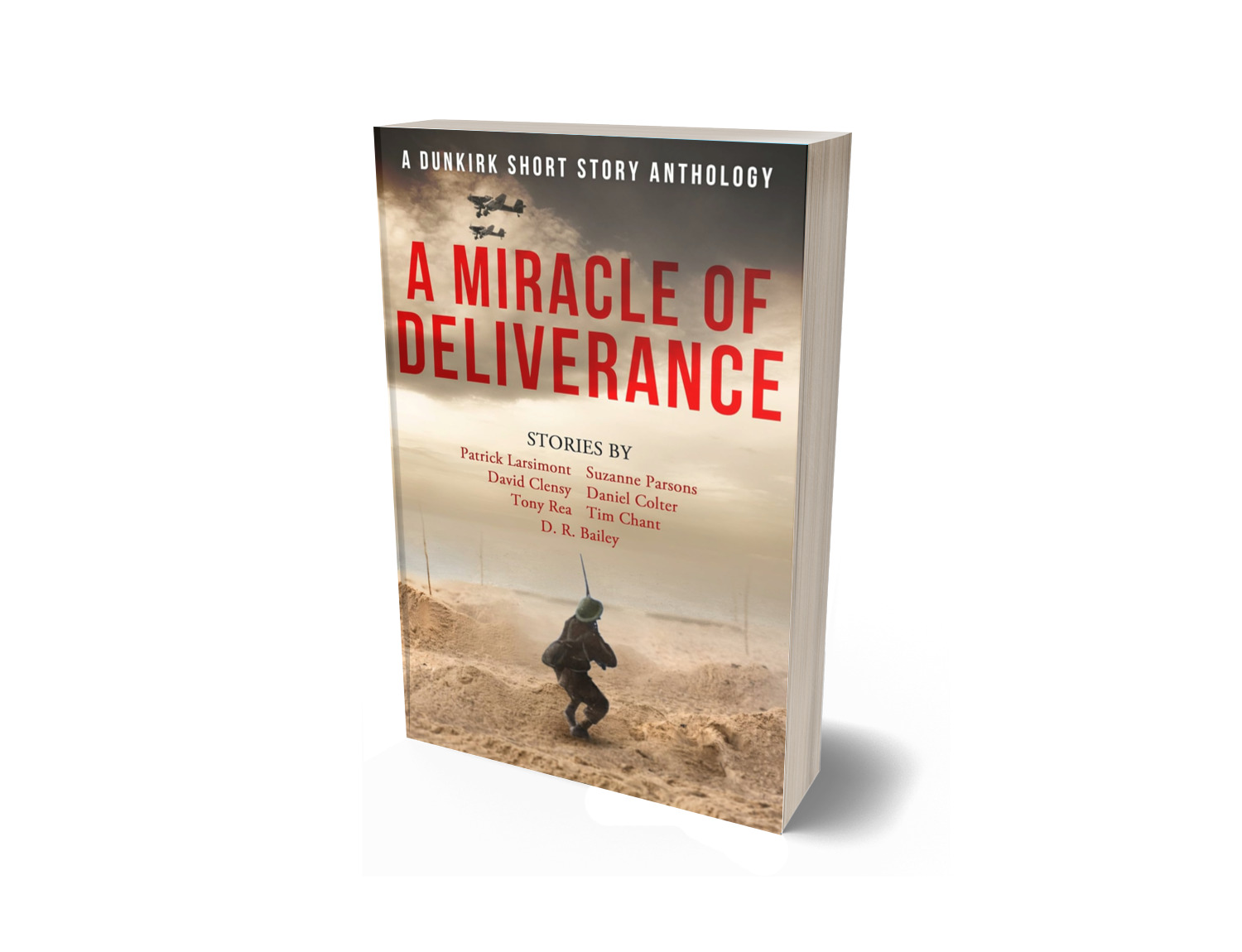
Each of the stories tackles the evacuation from a different perspective. My piece tells the story through the eyes of a British soldier. During the Battle of Dunkirk, around 3,500 British soldiers were killed. My unnamed narrator is envisioned to act as an “everyman”, representing the spirits of each of them.
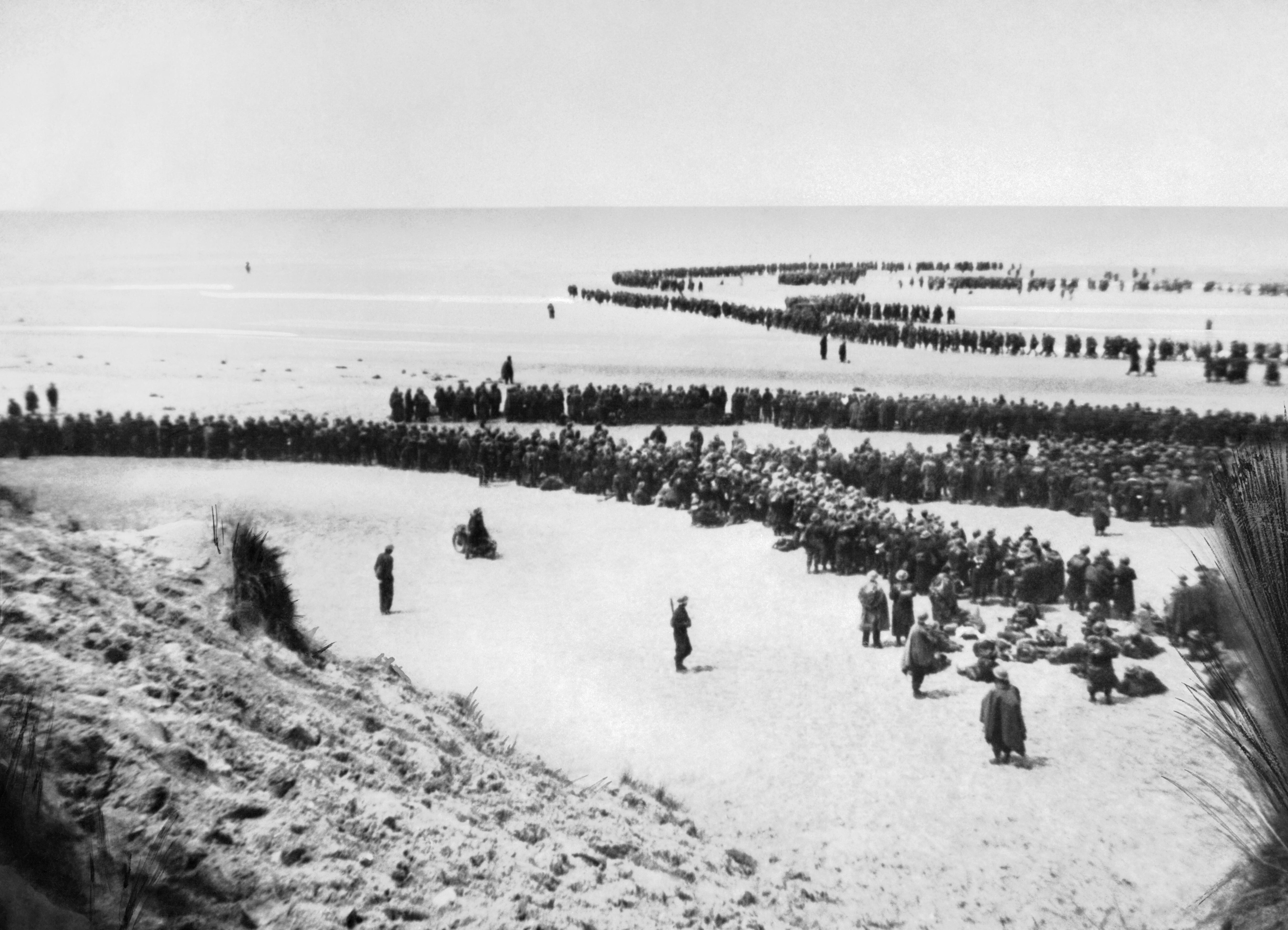
Despite the high death count, the evacuation, known as Operation Dynamo, successfully rescued more than 338,000 Allied soldiers, including about 198,000 British troops. Nevertheless, it was one of the darkest days in the history of the British Army – the evacuation marking the crushing final note of a drastic rout that threatened to lead to the seemingly inevitable invasion of the British Isles. But even in one of our nation’s darkest hours, Winston Churchill managed to raise the spirits of the British people, by emphasising the “miracle of deliverance”.
The nation rallied to rescue the Allied forces, who were stranded at Dunkirk with the full might of the Third Reich steamrollering towards them. In just nine days a remarkable total of 338,226 soldiers were plucked off the beaches and from the town’s harbour, in part thanks to an impromptu flotilla of around 700 merchant marine vessels – everything from fishing boats to pleasure craft to RNLI lifeboats, which took to the Channel to bring “our boys” home.
Real life inspiration
Back in 2010, while working as a regional newspaper journalist, I was fortunate enough to meet and interview Tom Mogg. He was by then 85 years old, but his memories of 1940, when he had been a 16-year-old apprentice with the General Steam Navigation Company, remained vivid. He recalled the moment he stepped aboard the Royal Daffodil, one of the company’s ships, after it had limped home from Dunkirk.
‘When I walked into the ship, it was a bright sunny day outside, and it gave the impression that I was walking into a colander – there were so many shafts of light beaming in through the holes left by German machine gun bullets,’ he recalled.
It was an image that stuck with me as an embodiment of the ferocity of the battle into which these merchantmen willingly sailed.
But not everyone escaped from the beaches of Dunkirk. Two years earlier, I had interviewed 89-year-old Dunkirk veteran Norman Binnall at his home in Burnham on Sea. In late May 1940, Norman had been leading a company of the 2nd Searchlight Royal Artillery, trying to reach the beaches at Dunkirk when disaster struck. His unit was making its way through the battle-torn streets of the town, within yards of the beaches, when the course of Norman’s war changed in a single blast.
‘A plane flew overhead, and dropped a bomb directly towards us,’ he told me. ‘The explosion killed all the men I was with. I was thrown to the ground, having lost my foot in the blast.’
The German officer who found him a short time later greeted Norman with the line that would go on to become a cliche in the hands of a generation of Hollywood filmmakers: ‘For you Tommy, the war is over.’
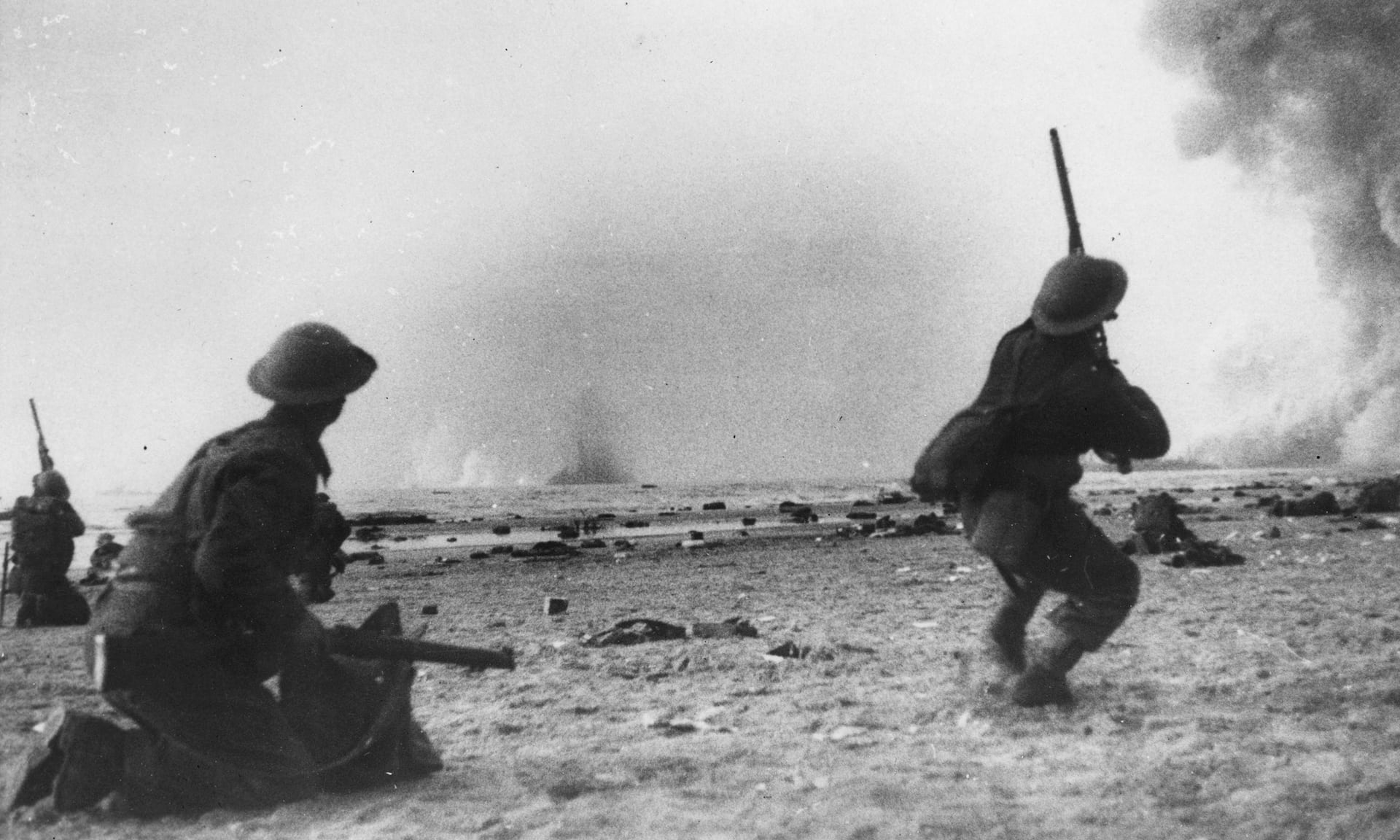
The Dunkirk bomb was the start of a whole new phase of his life – he would spend the next three years as a prisoner of war.
‘I was taken to hospital,’ he told me. ‘I can’t complain about the way the Germans treated me there. It was like being in any other hospital, though of course it played on your mind that you were no longer a free man. I was treated in France and then in Belgium for a while. Eventually I was deemed to be fit enough to be moved into Germany. I was given a peg leg, and I learned how to walk on it.’
After his period of rehabilitation in the German military hospital, he was transferred to Stalag IX-C, near Leipzig.
‘It was a small camp, and I was with a group of disabled PoWs, but we were only there a short time before being moved again and put to work in a tobacco factory called Nordhausen. We would just sit at a production line putting the cigarettes together. On the other side of the building we could see a group of Jewish ladies who were forced to work assembling the cigarette boxes.’
Norman and his fellow prisoners worked on the production line for a few months before being moved again.
‘It came out of the blue, somewhere in the middle of 1941,’ he said. ‘We were put on a train. They told us we were going home, that there was an agreement coming together to exchange disabled PoWs with the British. We were all excited about the prospect, and we were taken back to France.
‘But the agreement eventually fell through, so we were kept at a makeshift camp at Rouen racecourse until 1942, before being transported back into Germany. Then we were taken to Stalag 8B, near Landsdorf. This was a much larger camp, but the Germans still treated us reasonably. They were never particularly cruel. The only thing about them was they had a technique of punishing everybody if one person stepped out of line. You could lose the few privileges we were given.’
Norman rummaged around in a bag of mementoes to produce a small slip of paper with a Germanic eagle emblazoned on it.
‘This was the camp money,’ he told me. ‘You could buy a few bits and pieces.’
Norman reached deeper into his collection and pulled out a sepia photograph of nine men. Some are wearing vests, others well-worn military shirts. One has cultivated a long goatee beard. Another smokes a pipe. Norman stands near the back of the group, smiling resolutely.
‘This was taken in Stalag 8B,’ he said. ‘These were the friends I shared a hut with.’
Letters from captivity
The Germans allowed Norman to maintain correspondence with his girlfriend Gladys, whom he would later marry.
‘You were allowed to receive a card one month and a letter the next,’ he said. ‘We were also allowed to write a letter home each month, and they always got back to Gladys.’
When I met him back in 2008, all of Norman’s letters were immaculately preserved in the box where Gladys had lovingly kept them until her death after a battle with Alzheimer’s disease 12 years before.
‘These letters meant so much to both of us,’ he said. ‘Although we weren’t cruelly treated, the conditions were poor. Our beds, for example, were made of makeshift mattresses – sacks of woodwool (wood shavings) which had originally been used as packing in crates. It wasn’t like Colditz. But we all had disabilities, so there was no chance of escape.’
But this didn’t stop the camp’s most famous inmate from trying. Douglas Bader, whose story would later be immortalised in the film Reach For The Sky, was already a famous figure when he arrived in camp. The RAF fighter pilot, who had lost both legs in a pre-war accident, had made regular attempts to escape captivity since his aircraft came down in 1941.
‘He was a real character,’ Norman recalled. ‘After repeated attempts to escape, the Germans took his legs away. But he was so determined, they moved him to Colditz.’

Norman’s captivity came to an abrupt end almost two years before Colditz was relieved by the US Army.
‘It happened suddenly in the end,’ he said. ‘It was 1943, and we were told there was another agreement to exchange disabled PoWs. Before we knew what was happening we were taken by train to Hamburg, from where we were shipped over to neutral Sweden. Within a month we were back in Britain.’
Norman was gradually able to rebuild his life – transferring his pre-war skills as a heating engineer to work in a draughtsman’s office.
‘You learn to get by,’ he told me. ‘But you never forget.’
My conversation with him back in 2008, also stayed with me – a reminder of how tantalisingly close some British soldiers got to the evacuation beaches.
Together, it was Norman and Tom’s memories that inspired my story, which follows two soldiers trying to make their way to the beach at Dunkirk. One of the two characters, Sgt Patterson, may be familiar to those who have read my debut novel Prayer in Time of War. Here we meet Patterson three years before his adventures in the Italian Campaign in the novel.
I spent more than 20 years in the regional press at a time when many of the Second World War generation were in their autumn years. I was lucky enough to meet and interview many of them before they set sail from this life. It was, without a doubt, the greatest honour for me to be able to hear their stories firsthand.
All author royalties for A Miracle of Deliverance are going to support the excellent work of the Taxi Charity For Military Veterans. The book is released in paperback and Kindle (and Kindle Unlimited) on April 17. Preorder for Kindle now https://getbook.at/MiracleDeliverance
 davidclensy.com
Leave a comment