As the Second World War entered its final phase in the Pacific, the Japanese Empire faced an increasingly hopeless military situation. Its navy had suffered catastrophic losses, its air force was struggling to replace experienced pilots, and Allied forces were steadily advancing towards the Japanese home islands. Against this backdrop emerged one of the most controversial and dramatic tactics of the war: the kamikaze attack.
The word kamikaze, meaning “divine wind”, referred to the typhoons that destroyed Mongol invasion fleets threatening Japan in the thirteenth century. In 1944, Japanese military leaders revived the term in the hope that a new “divine wind” might halt the seemingly unstoppable Allied advance across the Pacific.
In the fifth and final part of the Romulus Hutchinson Naval Adventure series, CALM AMID THE RAGE, which is released on September 18th, 2026 (available now to preorder for Kindle), our hero Romulus Hutchinson witnesses the horrors of a kamikaze attack at firsthand. But it is just the first horror he is to face amid the unrelenting landscape of war in the Far East.
Author David Clensy says: “There is very little I can say about Calm Amid The Rage, without creating spoilers. So perhaps, it’s enough to say that in some ways this was a very difficult novel to write, as Rom faces some of the darkest days of the Second World War. But I hope the result is my most impactful piece of writing to date.
“I knew I wanted to tell the story of the Japanese war with balance and care. It would not be good enough to approach it from one side’s perspective. I was determined that the novel had to be bigger than that – it must attempt to show the humanity and the potential for brutality that exists in all people. As the novel evolved, this balance found its place in an unlikely moment of tenderness for our young hero.”
But the story opens with Rom thrown into the cauldron of kamikaze warfare. So what exactly were kamikaze attacks?
The Origins of the Kamikaze Campaign
By late 1944, Japan’s strategic position had deteriorated dramatically. American island-hopping campaigns had brought US forces ever closer to Japan, while the Imperial Japanese Navy had been weakened by years of attritional warfare. The decisive Battle of Leyte Gulf in October 1944 effectively crippled Japan’s ability to challenge Allied naval supremacy through conventional means.
Faced with overwhelming American industrial and military power, some Japanese commanders concluded that traditional tactics could no longer achieve meaningful results. Vice Admiral Takijirō Ōnishi became one of the principal architects of a new approach. Rather than attempting conventional bombing attacks, specially organised pilots would deliberately crash their aircraft into Allied ships, using both the aircraft and its fuel and bomb load as a guided missile.

The first organised kamikaze attacks occurred during the Battle of Leyte Gulf in October 1944. On 25 October, Japanese kamikaze pilots struck American escort carriers, sinking USS St. Lo, the first major warship lost to a kamikaze attack.
A Weapon of Desperation
While kamikaze pilots have often been portrayed as fanatics, the reality was more complex. Many were young men in their late teens or early twenties who had grown up in a highly militarised society. They were encouraged to see self-sacrifice as the ultimate act of loyalty to the Emperor and the nation.
The Japanese military presented the missions as noble and heroic. Public ceremonies, farewell letters and ritual departures reinforced the image of selfless sacrifice. However, surviving testimonies suggest that many pilots experienced fear, doubt and resignation rather than enthusiasm. Some volunteered willingly; others faced immense social and military pressure that left little room for refusal.
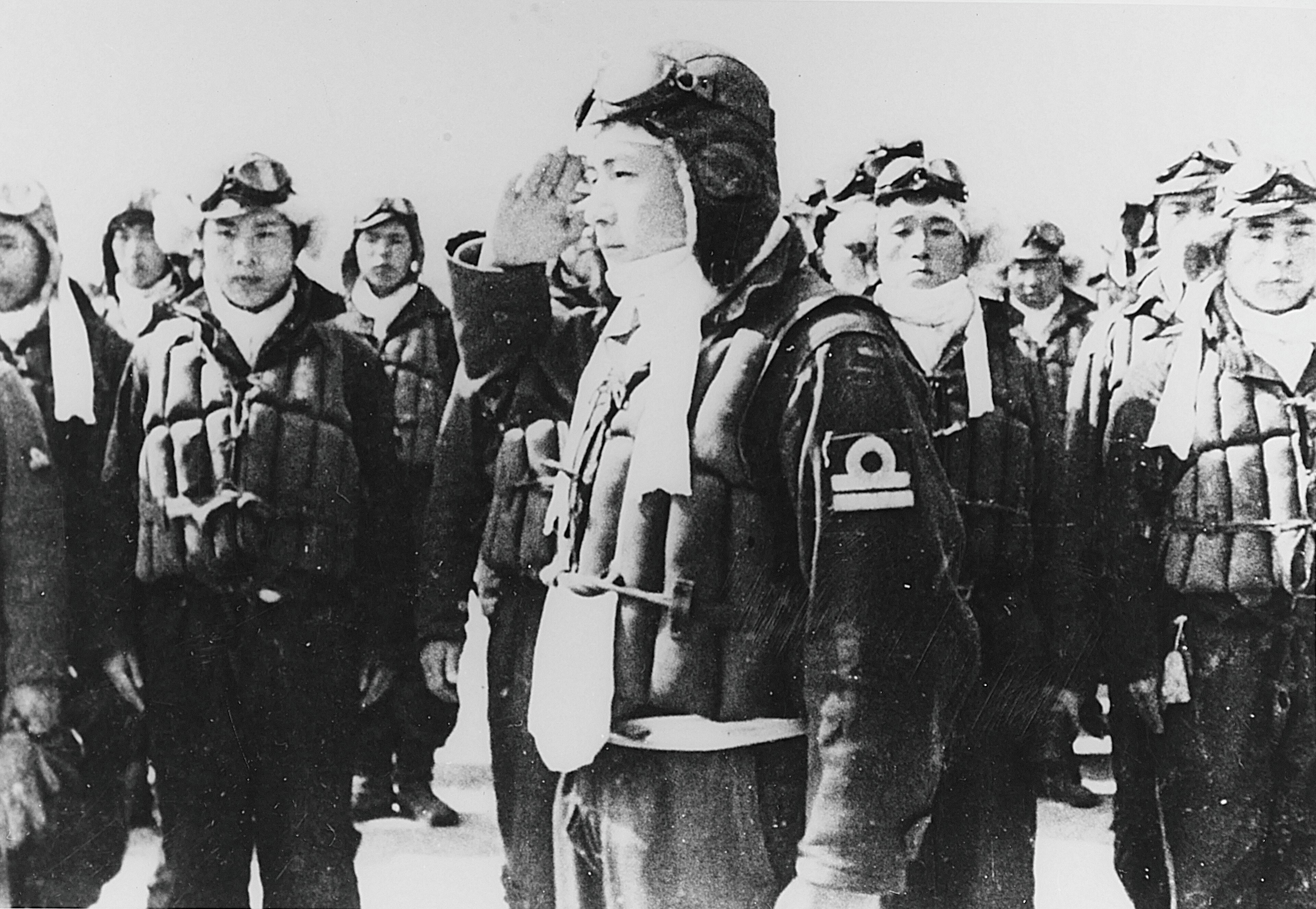
As the war progressed, the shortage of trained airmen became increasingly severe. Many kamikaze pilots received only limited flight training. Their mission required basic navigation, take-off and the ability to steer towards a target. Returning to base was never part of the plan.
Attacking Allied Shipping
The primary targets of kamikaze operations were Allied naval vessels supporting amphibious invasions. Aircraft carriers, destroyers, transports, supply ships and radar picket vessels all became targets.
The tactic exploited a difficult reality of naval warfare. Even if anti-aircraft fire damaged an incoming aircraft, a determined pilot could still guide the plane into a ship. A crashing aircraft carried not only bombs but also hundreds of gallons of aviation fuel, creating devastating fires upon impact.
During operations in the Philippines, kamikaze attacks inflicted significant damage on Allied fleets. The Australian cruiser HMAS Australia suffered multiple kamikaze strikes and was forced out of action for repairs. Numerous American ships were sunk or damaged during the Philippines campaign, convincing Japanese leaders that the tactic offered their best chance of resisting Allied invasions.
The Battle of Okinawa
The kamikaze campaign reached its peak during the Battle of Okinawa between April and June 1945, the largest amphibious assault in the Pacific War. With Japan’s conventional military options rapidly disappearing, thousands of aircraft were committed to mass kamikaze attacks against Allied naval forces.
The Japanese launched a series of coordinated operations known as Kikusui (“Floating Chrysanthemum”). Waves of kamikaze aircraft attacked ships supporting the invasion fleet around Okinawa. The objective was simple: inflict such severe casualties that the United States would reconsider invading Japan itself.
For Allied sailors, the attacks were terrifying. Unlike conventional bombing raids, the attackers showed no concern for survival. Radar picket destroyers stationed around Okinawa were especially vulnerable because they were often isolated and therefore attractive targets.

The damage was considerable. Dozens of Allied vessels were sunk, and hundreds more suffered varying degrees of damage. Thousands of sailors were killed or wounded during the campaign. Nevertheless, the attacks failed to achieve their strategic objective. The Allies retained control of the seas around Okinawa and ultimately secured the island.
Effectiveness and Legacy
From a purely tactical perspective, kamikaze attacks were more effective than many conventional Japanese air operations during the final months of the war. Allied commanders acknowledged that these merciless attacks could inflict substantial damage even against heavily defended ships. Admiral William Halsey later described them as among the most feared threats faced by the US Navy.
Strategically, however, the campaign failed. Despite sinking and damaging numerous vessels, kamikaze attacks could not reverse Japan’s deteriorating military position. American shipbuilding capacity easily replaced losses, while Japan exhausted valuable aircraft and pilots in the process.
The legacy of the kamikaze remains deeply controversial. In Japan, the pilots have been remembered variously as patriots, victims of militarism and tragic symbols of a society pushed to the brink of destruction. In Allied countries, they are often associated with the ferocity and desperation of the Pacific War. Ultimately, they were a very human tragedy for both sides.
The fifth and final part of the Romulus Hutchinson Naval Adventure series, CALM AMID THE RAGE, is released on September 18th, 2026.


Leave a comment