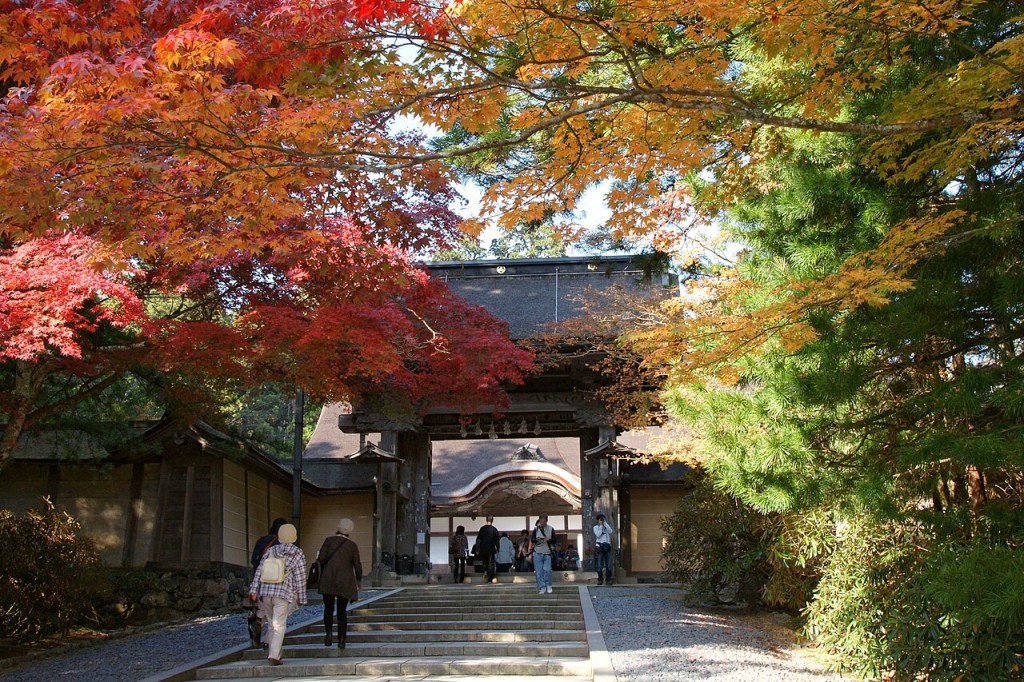
Last week saw the launch of Calm Amid the Rage – the fifth and final novel in the Romulus Hutchinson Naval Adventure series: action-packed, authentic historical adventures following twin brothers fighting with the Royal Navy and the Merchant Navy during the Second World War.
For me, it was also my opportunity to write a novel set in Japan. Indeed, when I first conceived the series, even before I had started work on the first novel in the series, For Those In Peril, it all began with a vision that had come into my mind of a young British serviceman travelling through a Japanese landscape in the latter days of the Second World War.
In my mind’s eye, I saw the landscape that I would go on to describe in the final novel in the series: “the rolling acres of forested hillsides, serene with mist rising between the layered treetops — the gentle ridgelines cloaked in the dense greenery as the forest unfurled itself across the edge of the hill like a discarded silk kimono”.
But I have never been to Japan. So this vision for the landscape came from somewhere deep in my subconscious – an accumulation of reading novels set amid this kind of serene Japanese landscape. So in this blog, I wanted to share some of my favourites:
Kazuo Ishiguro – A Pale View of Hills
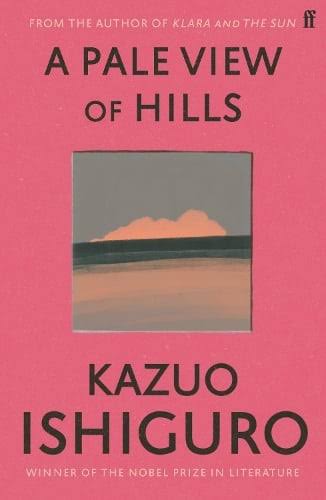
Kazuo Ishiguro’s A Pale View of Hills (1982) is a subtle and haunting novel that explores memory, loss and the lingering effects of war. The story is narrated by Etsuko, a Japanese woman living in England who reflects on her life in Nagasaki during the years following the Second World War. Prompted by the recent suicide of her eldest daughter, Etsuko begins recalling a friendship with a troubled woman named Sachiko and Sachiko’s young daughter, Mariko. As Etsuko recounts these memories, the boundaries between past and present become increasingly uncertain.
Set against the backdrop of a city rebuilding after the atomic bombing, the novel examines themes of displacement, cultural change and personal responsibility. Through Etsuko’s memories, Ishiguro presents a Japan caught between traditional values and Western influences. Sachiko’s determination to leave Japan for a new life abroad mirrors wider social changes, while her difficult relationship with Mariko highlights the emotional costs of ambition and migration. The atmosphere is quiet and restrained, yet beneath the surface lies a sense of unease and unresolved trauma.
One of the novel’s most distinctive features is its unreliable narration. As Etsuko’s account unfolds, readers begin to question whether her memories are entirely accurate and whether Sachiko’s story may in fact reflect aspects of Etsuko’s own past. Ishiguro deliberately leaves much unsaid, inviting readers to interpret the gaps and ambiguities for themselves. The result is a deeply reflective novel that explores how people reconstruct their histories and cope with guilt, grief and regret, themes that would become hallmarks of Ishiguro’s later work.
Haruki Murakami – Norwegian Wood
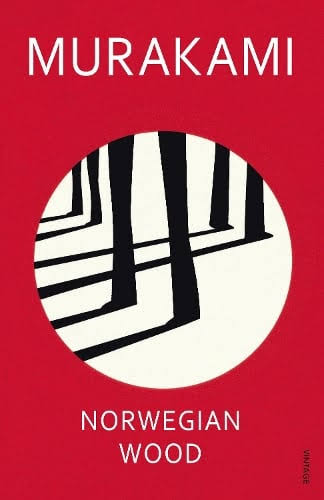
Haruki Murakami’s Norwegian Wood (1987) is a poignant coming-of-age novel that explores love, loss and the emotional turbulence of early adulthood. The story is narrated by Toru Watanabe, who, as a thirty-seven-year-old man, looks back on his university years in late 1960s Tokyo after hearing the Beatles song that gives the novel its title. His memories centre on two very different women: Naoko, the fragile and introspective girlfriend of his deceased best friend, and Midori, whose vitality and openness offer a contrasting vision of life and relationships.
Set during a period of significant social and political change in Japan, the novel examines themes of grief, loneliness and the search for identity. Toru struggles to navigate a world marked by death and emotional uncertainty, particularly following the suicide of his friend Kizuki and the psychological decline of Naoko. Through his encounters with a cast of memorable characters, including the compassionate Reiko, Murakami explores how individuals cope with trauma and the often complex connections between love, memory and healing.
Unlike many of Murakami’s later works, which feature elements of magical realism and surrealism, Norwegian Wood is grounded firmly in reality. Its emotional power lies in its simplicity, lyrical prose and deeply human characters. The novel captures the intensity of youth while reflecting on the lasting impact of the people we lose and the choices we make. Both tender and melancholic, Norwegian Wood remains one of Murakami’s most widely read and beloved novels, resonating with readers through its honest portrayal of heartbreak, desire and the difficult transition into adulthood.
Yasunari Kawabata’s Snow Country

Yasunari Kawabata’s Snow Country (Yukiguni), first published in completed form in 1948, is a lyrical and atmospheric novel that explores the tensions between beauty, desire and isolation. The story follows Shimamura, a wealthy Tokyo dilettante, who repeatedly travels to a remote hot spring town in Japan’s snowbound north. There he develops a relationship with Komako, a young geisha whose warmth, dedication and emotional honesty contrast sharply with his own detachment. From the outset, their connection is marked by an awareness of its impermanence and the barriers that prevent genuine intimacy.
Set against the striking backdrop of Japan’s mountainous winter landscape, the novel uses nature as both setting and symbolism. The deep snow, quiet villages and changing seasons mirror the emotional distance between the characters and the fleeting nature of human experience. Alongside Komako, the mysterious and ethereal Yoko becomes an important presence in the narrative, creating a subtle triangle of attraction, admiration and longing. Through these relationships, Kawabata examines themes of unfulfilled love, loneliness and the search for meaning in moments of transient beauty.
Renowned for its elegance and restraint, Snow Country is often regarded as one of the finest works of twentieth-century Japanese literature. Kawabata’s sparse, poetic prose leaves much unsaid, encouraging readers to reflect on the emotions beneath the surface of the story. Rather than relying on dramatic plot developments, the novel derives its power from atmosphere, imagery and psychological nuance. The result is a meditative and deeply moving work that captures the poignancy of lives and relationships that are both beautiful and destined to fade.
Kazuo Ishiguro – An Artist of the Floating World
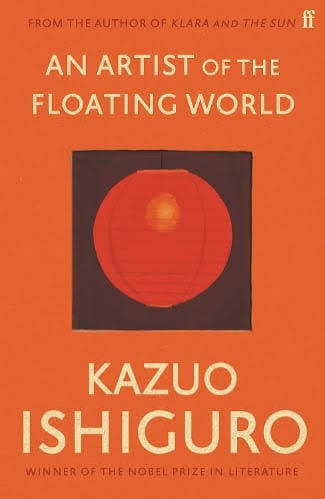
I’m a big fan of Ishiguro, so he gets two entries. An Artist of the Floating World is Kazuo Ishiguro’s second novel, published in 1986, and is set in Japan during the years following the Second World War. The story is narrated by Masuji Ono, an ageing painter who once enjoyed considerable prestige for his artistic work and influence. As Ono reflects on his past while arranging a marriage for his younger daughter, he is forced to confront uncomfortable questions about his role in supporting Japanese nationalism and militarism before the war. Through his recollections, the novel explores the tension between personal memory and historical truth.
The narrative unfolds through Ono’s fragmented and often unreliable memories. As he revisits key moments from his career and relationships, readers gradually become aware that his account may not be entirely accurate or complete. Ishiguro uses this uncertainty to examine how individuals reshape the past in order to live with guilt, regret, and changing social values. Ono’s efforts to justify or reinterpret his actions reveal the complex ways in which people construct their identities from memory.
At its heart, the novel is a meditation on responsibility, generational change, and the consequences of political conviction. The younger generation, having grown up in the aftermath of Japan’s defeat, increasingly questions the ideals that Ono once championed. As traditional attitudes give way to new perspectives, Ono must evaluate both his personal legacy and the wider role played by artists and intellectuals in shaping public opinion. Subtle, thoughtful, and deeply reflective, An Artist of the Floating World established many of the themes that would characterise Ishiguro’s later work, particularly the fragile relationship between memory, self-deception, and truth.
Non fiction books set in Japan that should be a “must” on your TBR pile:
John Hersey – Hiroshima
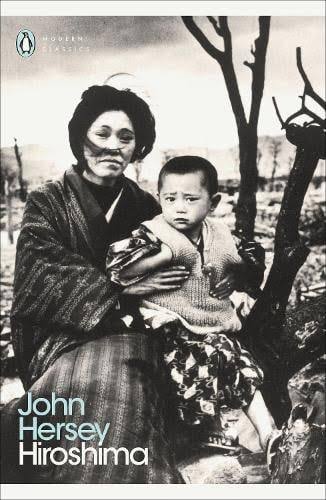
John Hersey’s Hiroshima (1946) is a ground-breaking work of narrative non-fiction that recounts the experiences of six survivors of the atomic bombing of Hiroshima on 6 August 1945. Rather than focusing on military strategy or political decisions, Hersey tells the story through the eyes of ordinary individuals, including a doctor, a clerk, a widowed seamstress, a German priest, a Methodist minister and a young surgeon. By following their lives before, during and after the bombing, he offers a deeply personal account of one of the most devastating events in human history.
The book vividly describes the immediate effects of the atomic bomb and the chaos that followed. Hersey documents the destruction of the city, the horrific injuries suffered by survivors and the confusion surrounding the mysterious illness later understood to be radiation sickness. Through clear, restrained prose, he avoids sensationalism, allowing the eyewitness testimony of the survivors to convey the full scale of the tragedy. The result is a powerful portrait of human suffering, resilience and compassion in the face of unimaginable devastation.
Widely regarded as one of the most influential works of twentieth-century journalism, Hiroshima transformed public understanding of nuclear warfare. Its publication brought the human consequences of the atomic bomb to an international audience and challenged readers to confront the moral implications of modern warfare. Blending the techniques of fiction with rigorous reporting, Hersey created a work that is both historical document and literary achievement, ensuring that the experiences of Hiroshima’s survivors would not be forgotten.
Alistair Urquhart – The Forgotten Highlander
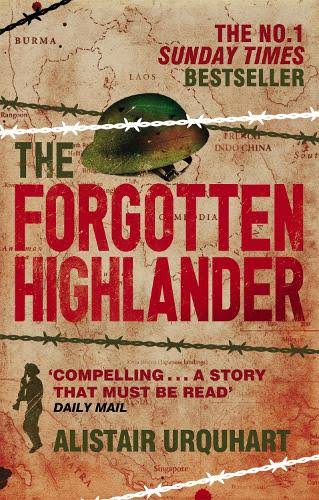
Alistair Urquhart’s The Forgotten Highlander (2010) is a remarkable memoir that recounts one of the most extraordinary survival stories of the Second World War. Born in Aberdeen, Scotland, Urquhart served with the Gordon Highlanders in the Far East and was captured by Japanese forces following the fall of Singapore in 1942. What followed was an ordeal that took him across some of the most brutal theatres of the war, from slave labour on the Thai-Burma Railway to imprisonment in overcrowded camps and transportation aboard a notorious Japanese “hell ship”.
The memoir provides a harrowing first-hand account of the treatment endured by Allied prisoners of war in Asia. Urquhart describes starvation, disease, physical abuse and the constant struggle to stay alive under unimaginably harsh conditions. His journey became even more extraordinary when the ship transporting him to Japan was torpedoed by an American submarine, leaving him one of only a handful of survivors. Throughout the book, he recounts these experiences with honesty and clarity, highlighting both the cruelty he witnessed and the resilience that enabled him to endure.
More than a military memoir, The Forgotten Highlander is a testament to human endurance and the importance of remembrance. For decades after the war, Urquhart rarely spoke about his experiences, carrying the psychological scars of captivity in silence. By eventually recording his story, he brought attention to a chapter of the war that had often been overshadowed by events elsewhere. The result is a powerful and deeply moving narrative that offers valuable insight into the suffering of Far East prisoners of war and the extraordinary strength required to survive against overwhelming odds.
Dr Michihiko Hachiya – The Doctor of Hiroshima
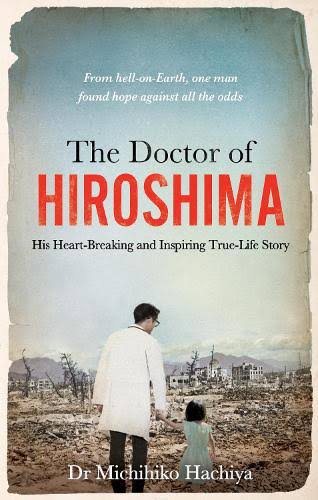
Dr Michihiko Hachiya’s The Doctor of Hiroshima is a powerful memoir that provides a firsthand account of the atomic bombing of Hiroshima and its aftermath. Hachiya was the director of the Hiroshima Communications Hospital when the atomic bomb exploded on 6 August 1945. Injured in the blast himself, he began keeping a detailed diary that records not only his own experiences but also those of his patients, colleagues and fellow citizens. Written with the careful observations of a physician and the sensitivity of a witness to catastrophe, the book offers an intimate perspective on one of history’s most significant events.
The diary vividly captures the confusion, suffering and uncertainty that followed the bombing. Hachiya describes the devastated city, the overwhelming number of casualties and the mysterious illnesses that afflicted survivors before the effects of radiation were fully understood. As a doctor, he documents both the physical injuries and the emotional trauma endured by those around him. His account balances clinical observation with deep compassion, providing a unique insight into how medical professionals struggled to care for patients amid unprecedented conditions and limited resources.
More than a historical record, The Doctor of Hiroshima is a testament to human resilience and dignity in the face of unimaginable destruction. Hachiya’s reflections reveal not only the horrors of nuclear warfare but also the courage, kindness and determination displayed by ordinary people trying to rebuild their lives. Widely regarded as one of the most important eyewitness accounts of the atomic bombing, the book remains a compelling and deeply moving exploration of survival, memory and the human cost of war.
Eric Lomax – The Railwayman
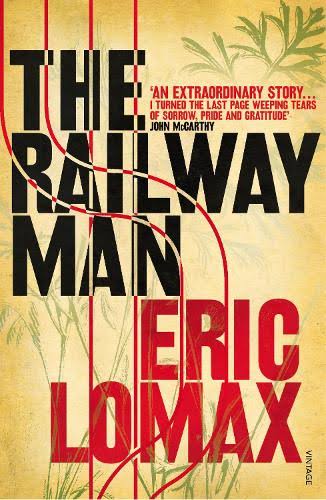
Eric Lomax’s The Railwayman (1995) is a moving memoir that recounts the author’s experiences as a British Army officer captured by the Japanese during the Second World War. After the fall of Singapore in 1942, Lomax was sent to work as a prisoner of war on the Thai-Burma Railway, one of the most infamous engineering projects of the war. When he was discovered with a secret radio, he was accused of espionage and subjected to brutal interrogation and torture by the Japanese military police. The book chronicles not only the physical hardships he endured but also the profound psychological scars that remained with him long after the war had ended.
At its heart, The Railwayman is an exploration of trauma and survival. Lomax writes candidly about the lasting effects of his captivity, describing decades of anger, fear and emotional isolation. His account offers a powerful insight into the experiences of Far East prisoners of war, many of whom struggled to rebuild their lives after returning home. The narrative combines vivid descriptions of wartime suffering with deeply personal reflections on memory, resilience and the long-term consequences of violence.
What distinguishes The Railwayman from many war memoirs is its remarkable story of reconciliation. Years after the war, Lomax learned that one of the Japanese interpreters involved in his interrogation had spent much of his life promoting peace and educating visitors about the wartime past. Their eventual meeting led Lomax to confront his memories and, ultimately, to forgiveness. The memoir is therefore not only a testament to endurance in the face of cruelty but also a profound meditation on healing, compassion and the possibility of reconciliation after unimaginable suffering.
I hope these recommendations have given you some ideas for books to help you delve further into the literature of Japan and memoirs of Japan at war. But it would be remiss of me to let you go without firstly telling you about Calm Amid the Rage – the fifth and final novel in the Romulus Hutchinson Naval Adventure series.
It is 1945. With the war in Europe coming to an end, twin brothers Romulus and Remus Hutchinson find their roles at sea are changing. Rom is promoted to Lieutenant Commander, and is now serving as part of the British Pacific Fleet. He struggles with the new responsibilities put on his young shoulders and with the shocking sights of Japanese kamikaze attacks.
Meanwhile, Remmie is adrift in Nigeria, desperate to bring his wife, Adanna, back to British shores. But not many people are supportive of their relationship.
When Rom is taken prisoner by the Japanese, he is exposed to the true horrors of war. Can Rom escape the brutal POW camp? Will he survive the Pacific campaign? And can Remmie find happiness with Adanna at last…?
Order your copy of CALM AMID THE RAGE now – available for paperback, Kindle and KindleUnlimited: https://getbook.at/CalmAmidRage



Leave a comment